
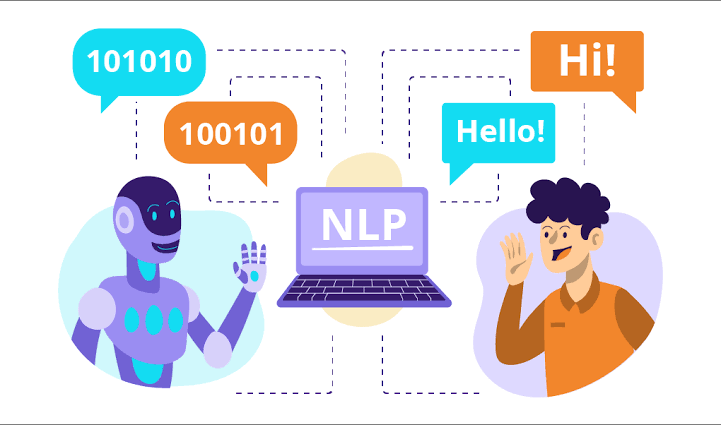
Language is one of the most important ways humans connect with one another. We use words to share ideas, express emotions, ask questions, solve problems, and build relationships. For thousands of years, people have developed different languages to communicate with each other. Today, however, language is no longer limited to human-to-human communication. Technology is becoming increasingly capable of understanding the way people naturally speak and write. This is where Natural Language plays an important role.
Natural language refers to the ordinary language that people use in their everyday lives. English, Spanish, Arabic, French, Chinese, and thousands of other languages are all examples of natural languages. Unlike programming languages, which follow strict rules and specific structures, natural language can be flexible, emotional, contextual, and sometimes ambiguous.
The ability of computers to understand natural language has opened the door to many useful technologies. From search engines and virtual assistants to chatbots and translation tools, natural language technology is now part of many everyday experiences.
What Is Natural Language?
Natural language is the form of communication that develops naturally among humans. It includes spoken words, written text, expressions, questions, commands, and conversations.
When people communicate, they do not always follow perfectly structured rules. We often use slang, abbreviations, humor, metaphors, or incomplete sentences. For example, someone might say, “Can you give me a hand?” They are usually not asking for a physical hand. They are asking for help.
Humans can understand this meaning because we consider the situation and context. Teaching a computer to make the same kind of interpretation is much more difficult.
Natural language is therefore more than a collection of words. Meaning can depend on tone, context, culture, previous conversations, and even the relationship between speakers.
Natural Language vs. Programming Language
One of the easiest ways to understand natural language is to compare it with programming languages.
Programming languages such as Python, Java, and C++ are designed for computers. They use specific syntax and rules. If a programmer writes something incorrectly, the computer may return an error because it cannot interpret the instruction.
Natural language is much less predictable. A person can express the same idea in many different ways.
For example, these sentences have a similar meaning:
- “Could you open the window?”
- “Can you open the window?”
- “Would you mind opening the window?”
- “Please open the window.”
A human can usually understand all of them without difficulty. A computer system, however, needs sophisticated technology to recognize that the different sentences are communicating essentially the same request.
How Computers Understand Natural Language
The field of technology focused on helping computers process human language is known as natural language processing, or NLP. It combines ideas from computer science, linguistics, artificial intelligence, and machine learning.
When a computer receives a sentence, it does not understand it in exactly the same way a human brain does. Instead, language-processing systems analyze patterns in the words and their relationships.
A system may identify individual words, determine grammatical structures, recognize entities such as names or locations, and estimate the meaning or intention behind a sentence.
For example, consider the question, “What is the weather like in London today?”
A language-processing system may recognize:
- “weather” as the main topic
- “London” as a location
- “today” as a time reference
- the overall sentence as a request for weather information
This kind of analysis allows software to respond to human requests in a more useful way.
The Role of Artificial Intelligence
Artificial intelligence has significantly changed how machines work with natural language. Earlier language-based systems often depended on predefined rules. They could perform simple tasks but struggled when users expressed themselves in unexpected ways.
Modern AI systems can learn language patterns from very large collections of text. This allows them to recognize relationships between words and understand many different forms of expression.
For example, an AI assistant may understand that “I need a place to stay in New York next weekend” is related to finding accommodation, even though the user never directly says, “Find me a hotel.”
This ability to interpret intent makes natural language interfaces much easier for people to use.
Everyday Applications of Natural Language
Natural language technology is already used in many areas of everyday life.
Search Engines
Search engines rely heavily on language understanding to determine what users are looking for. People rarely search using perfectly structured questions. Instead, they may type short phrases, misspell words, or use conversational language.
Modern search systems attempt to understand the intent behind a query rather than simply matching individual keywords.
For example, a person searching for “best food to eat when it is really hot outside” is probably looking for refreshing meal ideas. A language-aware system can use the meaning of the query to provide more relevant results.
Virtual Assistants
Virtual assistants are another common example. People can speak naturally to devices instead of using complicated commands.
A user might say, “Remind me to call Mom when I get home.”
The system needs to understand the action, the task, and the condition associated with it. Natural language processing helps transform everyday speech into an instruction that software can act upon.
Translation
Language translation is one of the most valuable applications of natural language technology. Modern translation systems can process large amounts of text quickly and provide translations between many languages.
Although machine translation is not perfect, improvements in AI have made it considerably more useful for travel, education, business, communication, and international collaboration.
Customer Service
Many companies use language-based chatbots to answer customer questions. These systems can handle common requests such as checking order information, explaining basic policies, or helping customers find information.
A well-designed chatbot can save time for both customers and employees. More complicated issues can then be transferred to a human representative.
Why Context Matters
One of the biggest challenges in natural language understanding is context.
Words can have different meanings depending on how they are used. Consider the word “bank.” It could refer to a financial institution or the side of a river.
If someone says, “I went to the bank to deposit some money,” the meaning is obvious to a human because of the surrounding words.
Context can also extend beyond a single sentence. During a conversation, people often use words such as “he,” “she,” “it,” or “that place” without repeating the full information. We understand these references because we remember what was discussed earlier.
For machines, maintaining this context can be challenging, especially during long or complicated conversations.
Natural Language and Accessibility
Natural language technology can also make digital tools more accessible.
People who find traditional interfaces difficult to use may benefit from voice-based systems or conversational interfaces. Instead of navigating through multiple menus, they can simply describe what they want.
Speech recognition can convert spoken language into text, while language understanding systems can interpret the request. These technologies can support people with different abilities and provide alternative ways to interact with computers and mobile devices.
Challenges of Natural Language Technology
Despite impressive progress, understanding natural language remains difficult.
Human language contains ambiguity, sarcasm, cultural references, idioms, and subtle emotional meanings. A sentence can sometimes mean something completely different from its literal wording.
For example, when someone says, “That was just great,” their meaning could be positive or sarcastic depending on the situation and tone.
Another challenge is that language changes constantly. New words, slang, abbreviations, and expressions appear over time. Technology needs to adapt to these changes.
There are also concerns about bias and accuracy. AI systems learn patterns from data, and if that data contains biases or inaccurate information, the resulting system can sometimes reproduce those problems.
For this reason, responsible development and careful evaluation are important when creating language-based technologies.
The Future of Natural Language
The future of natural language technology is likely to become even more conversational. Instead of learning how to operate complicated software, people may increasingly communicate with digital systems in the same way they communicate with other people.
This could change education, healthcare, customer service, business communication, software development, and many other industries.
Imagine being able to explain a complicated task in ordinary language and having software understand the request, ask useful follow-up questions, and help complete the task. Such systems could reduce the technical knowledge required to use advanced digital tools.
At the same time, humans will continue to play an important role. Natural language systems can process information and generate useful responses, but human judgment is still necessary for important decisions, sensitive situations, and creative work.
Conclusion
Natural language is the foundation of human communication, and technology is becoming increasingly capable of working with it. Through natural language processing and artificial intelligence, computers can analyze text, recognize speech, identify user intentions, translate languages, answer questions, and support conversations.
From search engines and virtual assistants to customer service and accessibility tools, natural language technology is already influencing how people interact with the digital world.
However, human communication is complex. Understanding words is only one part of understanding a message. Context, culture, emotion, intention, and experience all contribute to meaning.
As technology continues to improve, the goal is not simply to make computers recognize more words. The larger goal is to make interactions between humans and machines more natural, useful, and intuitive. Natural language is helping move technology in that direction, creating a future where communicating with digital systems may feel less like operating a machine and more like having a conversation.