
Software development has changed dramatically over the past few years. Development teams are expected to build applications faster, release updates more frequently, and maintain a high level of quality at the same time. Meeting all of these expectations can be difficult when developers work separately and combine their code only at the end of a project. This is where Continuous Integration becomes extremely valuable.
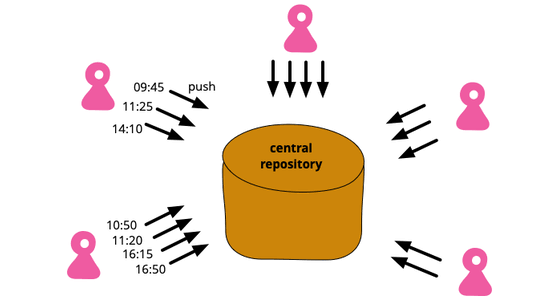
Continuous Integration, commonly known as CI, is a software development practice in which developers regularly integrate their code changes into a shared repository. Each change is automatically tested and checked to identify problems as early as possible. Instead of waiting weeks or months to discover that different pieces of code do not work together, teams can find and fix issues shortly after they are introduced.
What Is Continuous Integration?
Continuous Integration is a development approach designed to make collaboration between software developers easier and more reliable. In a traditional development environment, developers may work on separate features for a long period before merging their work. When those changes are finally combined, unexpected conflicts and bugs can appear.
With Continuous Integration, developers integrate small code changes frequently. Every time new code is added to the shared repository, an automated process can build the application, run tests, and check whether the new changes have caused any problems.
The main idea is simple: integrate early, test often, and fix problems quickly.
CI does not eliminate every software bug, but it helps development teams discover problems when they are still relatively easy to understand and correct.
How Does Continuous Integration Work?
A typical Continuous Integration workflow consists of several connected steps.
First, a developer works on a new feature, improvement, or bug fix. Once the change is ready, the developer commits the code to a shared version control repository.
A CI system detects the new commit and starts an automated pipeline. The pipeline may compile or build the application, install dependencies, perform code-quality checks, and run different types of automated tests.
If everything passes successfully, the team receives confirmation that the changes have met the defined checks. If something fails, the team receives an alert and can investigate the problem.
This process is repeated whenever developers submit new changes. Because the changes are integrated frequently, the amount of code involved in each integration is usually smaller. This makes problems easier to identify.
For example, imagine that ten developers are working on a large web application. Without CI, they might spend several weeks developing separate features before combining their work. If the final integration produces dozens of errors, finding the source of those errors can be frustrating.
With CI, each developer’s changes are integrated and tested regularly. If an issue appears after a particular commit, the team has a much smaller set of changes to investigate.
Key Components of Continuous Integration
Several important components make a successful CI environment possible.
Version Control
A version control system allows developers to manage changes to source code and collaborate effectively. It also provides a central location where code can be stored and tracked.
Developers typically create branches for their work and merge completed changes into a shared branch according to the team’s workflow.
Automated Testing
Automated testing is one of the most important parts of CI. Tests can verify whether individual functions, components, or larger parts of an application behave as expected.
Common testing levels include unit tests, integration tests, and other automated checks. The more reliable the test suite is, the more confidence developers can have when integrating new code.
Build Automation
A CI pipeline can automatically build an application whenever changes are submitted. This confirms that the source code can be successfully compiled or packaged and that required dependencies are available.
A failed build provides an immediate signal that something needs attention.
CI Server or Platform
A CI platform manages the automation process. It receives code changes, executes defined jobs, runs tests, and reports the results to developers.
Different organizations choose different CI solutions depending on their technology stack, team size, security requirements, and budget.
Benefits of Continuous Integration
Continuous Integration offers several advantages for both developers and organizations.
Faster Detection of Bugs
One of the biggest benefits of CI is early bug detection. When developers integrate code frequently, automated tests can identify problems soon after they are introduced.
Finding a bug shortly after writing the related code is generally easier than discovering it several weeks later.
Better Collaboration
CI encourages developers to work with a shared and consistent codebase. Since changes are integrated regularly, teams are less likely to face massive integration problems at the end of a development cycle.
This can make collaboration smoother, particularly when multiple developers are working on related features.
Improved Software Quality
Automated tests and code-quality checks can be performed consistently. Instead of relying entirely on manual testing, teams can automatically verify important parts of an application whenever changes are made.
This creates an additional layer of protection against regressions.
Faster Development Cycles
When integration becomes a routine automated process, developers can spend less time manually checking whether their changes work with the rest of the application.
The development process becomes more predictable, allowing teams to focus more on building useful features.
Reduced Integration Problems
Large code merges can create complicated conflicts. Continuous Integration reduces the size and frequency of these integration challenges by encouraging developers to merge changes regularly.
Frequent integration does not mean conflicts will disappear completely, but it can make them significantly easier to manage.
Continuous Integration vs. Continuous Delivery
Continuous Integration is often discussed alongside Continuous Delivery and Continuous Deployment, but these concepts are not identical.
Continuous Integration focuses primarily on regularly integrating code and automatically validating those changes.
Continuous Delivery extends the process by keeping software in a releasable state. After the code passes the required checks, it can be prepared for deployment with minimal additional effort.
Continuous Deployment takes automation one step further. In a mature Continuous Deployment environment, changes that successfully pass the required pipeline can be released to production automatically.
These practices can work together, but a team can use Continuous Integration without automatically deploying every successful change to users.
Best Practices for Continuous Integration
Implementing CI successfully requires more than simply installing a CI tool. Teams also need an effective development process.
One important practice is to commit small changes frequently. Smaller changes make failures easier to understand and reduce the difficulty of troubleshooting.
Teams should also maintain a reliable automated test suite. If tests are slow, unstable, or frequently produce false failures, developers may lose confidence in the CI system.
Another useful practice is to keep the main branch healthy. Developers should avoid leaving broken changes in the shared branch for long periods.
Fast feedback is also important. If a CI pipeline takes an excessive amount of time to complete, developers may delay checking results. Optimizing tests and build processes can make the entire workflow more effective.
Finally, teams should treat CI failures as a priority. A broken pipeline should not simply be ignored. When failures are addressed quickly, CI remains a trustworthy part of the development process.
Common Challenges of Continuous Integration
Although Continuous Integration provides many benefits, implementing it can present challenges.
The first challenge is creating enough automated tests. Teams that have historically relied on manual testing may need significant time to build a useful automated test suite.
Another challenge is maintaining the CI pipeline itself. Dependencies change, tools need updates, and test environments can become outdated. Someone must take responsibility for keeping the system reliable.
Flaky tests are another common problem. A flaky test may pass during one run and fail during another without any actual change in the application. Too many unreliable tests can make developers ignore CI warnings.
There can also be a cultural challenge. CI works best when developers understand that frequent integration and quick feedback are shared responsibilities rather than tasks belonging only to a dedicated operations team.
Why Continuous Integration Matters Today
Modern applications are often large, complex, and developed by distributed teams. New features, security updates, performance improvements, and bug fixes may need to be delivered regularly.
Without an efficient integration process, frequent development can quickly become difficult to manage.
Continuous Integration provides a structured way to handle constant code changes. It creates a feedback loop between development and testing, helping teams understand whether their latest changes are safe to integrate.
More importantly, CI encourages a development culture based on smaller changes, regular collaboration, automation, and quick problem resolution.
It is not simply a tool or a server running automated tests. It is a development practice that can influence how an entire team approaches software development.
Frequently Asked Questions
1. What is Continuous Integration in simple words?
Continuous Integration is a software development practice where developers frequently add their code changes to a shared repository. Automated systems then build and test those changes to identify problems quickly.
2. Why is Continuous Integration important?
Continuous Integration helps teams detect bugs early, reduce integration conflicts, improve collaboration, and maintain software quality. It also provides developers with fast feedback about whether their changes work correctly with the existing codebase.
3. Is Continuous Integration the same as Continuous Deployment?
No. Continuous Integration focuses on integrating and testing code changes frequently. Continuous Deployment goes further by automatically releasing successfully tested changes to production. Continuous Delivery sits between these practices by keeping software ready for release.
4. What tools are commonly used for Continuous Integration?
Teams can choose from many CI platforms and automation tools. The right choice depends on the project’s programming languages, repository setup, infrastructure, security requirements, and development workflow.
5. Can small development teams use Continuous Integration?
Yes. Continuous Integration can be useful for teams of almost any size. Small teams can start with a simple pipeline that automatically builds the project and runs essential tests whenever code changes are submitted. As the project grows, the CI process can become more advanced.
Final Thoughts
Continuous Integration has become an important practice for software teams that want to deliver reliable applications efficiently. By integrating code frequently and automatically testing changes, developers can discover problems earlier, collaborate more effectively, and reduce the risks associated with large integrations.
A successful CI strategy depends on several factors, including version control, automated testing, reliable build processes, fast feedback, and a team culture that takes failures seriously.
For organizations beginning their CI journey, the best approach is often to start with a simple pipeline, automate the most important tests, and gradually improve the process. As the team becomes more comfortable with frequent integration, additional checks and automation can be introduced.
Ultimately, the goal of Continuous Integration is not just to make software development faster. It is to make the development process more predictable, collaborative, and reliable while giving teams greater confidence in every change they make.