
In today’s digital world, businesses collect more data than ever before. Every purchase, website visit, customer interaction, social media activity, and online search can provide valuable information. However, simply having a large amount of data is not enough. Businesses need to understand that data and use it to make better decisions. This is where Predictive Analytics becomes important.
Predictive Analytics helps organizations study historical and current data to identify patterns and estimate what may happen in the future. Instead of making decisions based only on assumptions or intuition, companies can use data-driven insights to prepare for possible outcomes.
From predicting customer behavior to managing financial risks and improving business operations, Predictive Analytics has become a valuable tool across many industries. As technology continues to develop, its role in modern business is expected to become even more important.
What Is Predictive Analytics?
Predictive Analytics is a method of analyzing existing data to forecast future events, behaviors, or trends. It uses statistical techniques, machine learning, artificial intelligence, and data-mining methods to find patterns within information.
For example, an online store may analyze a customer’s previous purchases, browsing behavior, and product preferences. Based on this information, the company can predict which products that customer may be interested in buying next.
The goal is not to predict the future with complete certainty. Instead, Predictive Analytics provides businesses with a probability-based view of what could happen. This allows decision-makers to prepare more effectively and reduce unnecessary risks.
How Does Predictive Analytics Work?
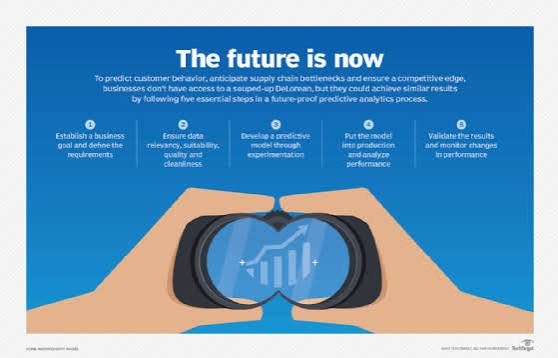
The process usually begins with collecting relevant data. This data may come from sales records, customer databases, websites, mobile applications, surveys, financial systems, or other sources.
Once the data is collected, it needs to be cleaned and organized. Poor-quality or incomplete data can lead to inaccurate predictions, so businesses must make sure their information is reliable.
After that, analysts use statistical models or machine learning algorithms to identify relationships and patterns. The model is trained using historical information and then tested to determine how accurately it can predict future outcomes.
Finally, the results are presented in a way that business leaders can understand and use. These insights may help a company decide which products to promote, how much inventory to keep, which customers may leave, or where additional resources are needed.
Why Is Predictive Analytics Important?
One of the biggest advantages of Predictive Analytics is that it allows businesses to become more proactive.
Traditional decision-making often focuses on what has already happened. Predictive methods go a step further by asking what is likely to happen next. This difference can have a significant impact on business planning.
For example, if a company notices that customer cancellations are increasing among a particular group, it can use predictive models to identify customers who may be at risk of leaving. The business can then offer better support or personalized incentives before those customers decide to leave.
Predictive Analytics can also help companies control costs, improve efficiency, increase revenue, and manage potential risks.
Common Applications of Predictive Analytics
Predictive Analytics is used in many areas of business and everyday life. Some of its most common applications include:
Customer Behavior
Companies want to understand what their customers are likely to do next. Predictive models can analyze purchasing patterns, browsing activity, customer service interactions, and other information to estimate future behavior.
This can help businesses create more personalized marketing campaigns and recommend products that are more relevant to individual customers.
Sales Forecasting
Accurate sales forecasts are essential for effective business planning. Predictive models can examine previous sales, seasonal patterns, market conditions, and other factors to estimate future demand.
A company can use these forecasts to set realistic sales targets and make better decisions about staffing, inventory, and marketing budgets.
Fraud Detection
Financial institutions and online businesses use predictive methods to identify unusual transactions. A model can learn what normal activity looks like and flag transactions that appear suspicious.
This does not mean every unusual transaction is fraudulent, but it gives security teams a way to prioritize transactions that require additional investigation.
Risk Management
Businesses face many types of risks, including financial, operational, and cybersecurity risks. Predictive Analytics can help organizations identify warning signs before a serious problem occurs.
For example, an insurance company may analyze historical claims and customer information to estimate the likelihood of future claims.
Inventory Management
Keeping too much inventory can increase storage costs, while keeping too little can result in missed sales. Predictive models can help companies estimate future demand and maintain more appropriate inventory levels.
This is particularly useful for businesses that experience seasonal changes in customer demand.
Benefits of Predictive Analytics
There are several reasons why businesses invest in predictive technologies.
First, it can improve decision-making. Managers can use evidence from historical data rather than relying entirely on personal assumptions.
Second, it can improve operational efficiency. When businesses understand expected demand and potential problems, they can allocate employees, equipment, and financial resources more effectively.
Another benefit is improved customer experience. Predictive models can help companies understand individual preferences and provide more relevant recommendations, offers, and services.
Predictive Analytics can also support risk reduction. Identifying potential problems earlier gives organizations more time to respond.
Finally, better predictions can create a competitive advantage. Companies that respond quickly to changing customer needs and market conditions may have an advantage over businesses that rely on slower, traditional decision-making methods.
Challenges of Predictive Analytics
Although Predictive Analytics offers many advantages, it is not a perfect solution.
The quality of predictions depends heavily on the quality of the data being used. If historical data is incomplete, outdated, biased, or inaccurate, the resulting predictions may also be unreliable.
Another challenge is privacy. Businesses often work with large amounts of customer information, so they must handle that data responsibly and follow applicable privacy and data-protection requirements.
Models can also become less accurate when circumstances change. A prediction based on historical consumer behavior may not work as well during an unexpected economic event, major technological change, or sudden shift in customer preferences.
There is also the issue of interpretation. A predictive model may produce a probability or score, but business leaders still need to understand what that result means before making an important decision.
Predictive Analytics and Artificial Intelligence
Artificial intelligence and machine learning have helped make Predictive Analytics more powerful. Machine learning systems can process large datasets and identify complex patterns that may be difficult for humans to discover manually.
For example, a machine learning model can examine thousands or millions of customer records and identify subtle behaviors associated with future purchases or customer churn.
However, artificial intelligence does not eliminate the need for human judgment. Businesses still need experts to select appropriate data, evaluate models, consider ethical issues, and determine how predictions should influence real-world decisions.
The strongest results often come from combining advanced technology with human experience.
The Future of Predictive Analytics
The future of Predictive Analytics looks promising as businesses continue to generate more data and adopt advanced technologies.
Cloud computing, artificial intelligence, automation, and real-time data processing are making predictive systems faster and more accessible. Even smaller businesses can now use tools that were once available mainly to large corporations.
In the future, predictive systems may become more closely integrated into everyday business operations. Instead of producing occasional reports, they may continuously monitor data and provide recommendations when important changes occur.
At the same time, businesses will need to pay greater attention to transparency, privacy, security, and responsible use of data. Accurate predictions are valuable, but they must be used in ways that respect customers and employees.
Frequently Asked Questions
1. What is Predictive Analytics in simple words?
Predictive Analytics is the process of using past and current data to estimate what is likely to happen in the future. It helps businesses identify patterns and make more informed decisions.
2. How does Predictive Analytics help businesses?
It can help businesses forecast sales, understand customer behavior, detect potential fraud, manage inventory, reduce risks, and improve operational efficiency. It gives decision-makers useful information about possible future outcomes.
3. What types of data are used in Predictive Analytics?
Businesses can use many types of data, including sales records, customer information, website activity, financial data, transaction histories, market information, and operational records. The appropriate data depends on the goal of the prediction.
4. Is Predictive Analytics the same as artificial intelligence?
No. Predictive Analytics is a broader analytical approach that can use statistics, data mining, machine learning, and artificial intelligence. AI and machine learning are technologies that can be used to improve predictive models.
5. Can small businesses use Predictive Analytics?
Yes. Predictive tools are becoming more affordable and accessible, allowing small businesses to use them for areas such as sales forecasting, customer analysis, marketing, and inventory management.
6. How accurate is Predictive Analytics?
Accuracy depends on several factors, including data quality, the selected model, the amount of available historical information, and changes in market or customer behavior. Predictive Analytics provides estimates rather than guaranteed outcomes.
7. What are the main challenges of Predictive Analytics?
Common challenges include poor-quality data, privacy concerns, biased datasets, changing market conditions, technical complexity, and difficulty interpreting model results. Proper data management and human oversight can help address these issues.
8. Why will Predictive Analytics become more important in the future?
Businesses are generating increasing amounts of data, while technologies such as machine learning and artificial intelligence are becoming more advanced. This combination can make predictive systems faster, more useful, and more widely available across different industries.
Conclusion
Predictive Analytics has changed the way organizations think about data and decision-making. By studying historical information and identifying patterns, businesses can develop a better understanding of what may happen in the future.
Its applications range from customer recommendations and sales forecasting to fraud detection, risk management, and inventory planning. While there are challenges related to data quality, privacy, accuracy, and changing conditions, the potential benefits are significant.
As artificial intelligence and machine learning continue to evolve, Predictive Analytics will likely become an even more important part of modern business strategy. Organizations that learn how to combine reliable data, effective technology, and human judgment can use predictions to make smarter decisions and prepare more confidently for the future.