
In today’s digital world, businesses and individuals rely heavily on cloud platforms, online applications, connected devices, and digital networks. While these technologies make everyday tasks easier, they also create new opportunities for cybercriminals. Hackers are constantly developing new ways to steal information, damage systems, and gain unauthorized access. This is where threat detection becomes an important part of cybersecurity.
Threat detection is the process of identifying suspicious activities, security weaknesses, and potential cyberattacks before they can cause serious damage. It helps organizations understand what is happening inside their networks and systems so they can respond to threats quickly.
A strong threat detection strategy does more than simply look for known viruses or malware. Modern security teams also monitor unusual behavior, unexpected login attempts, suspicious network traffic, and other signs that something may be wrong. By detecting these warning signs early, organizations can reduce risks and protect valuable data.
What Is Threat Detection?
Threat detection refers to the methods, technologies, and processes used to identify potential security threats within a digital environment. These threats may include malware, ransomware, phishing attacks, unauthorized access, insider threats, data theft, and other forms of cybercrime.
Traditional security systems often depend on known threat signatures. For example, antivirus software may recognize a particular piece of malware because its code matches a previously identified threat. However, cyberattacks are becoming more sophisticated, and attackers frequently create new variations that traditional tools may not recognize.
Modern threat detection combines several techniques to identify suspicious activity. Security tools can analyze network traffic, user behavior, system logs, application activity, and other sources of information. When something unusual is detected, security teams can investigate it and take appropriate action.
Why Is Threat Detection Important?
Cybersecurity incidents can have serious consequences for organizations of all sizes. A successful attack can result in stolen customer information, financial losses, operational downtime, reputational damage, and legal problems.
Threat detection provides an early warning system. Instead of discovering an attack after important information has already been stolen, an organization may be able to identify suspicious behavior while the attacker is still trying to gain access.
For example, imagine an employee’s account suddenly attempts to access sensitive files from an unfamiliar location late at night. This activity may not automatically mean that the account has been compromised, but it could be a warning sign. A threat detection system can flag the behavior so that security professionals can investigate it.
Early detection can make a major difference. The sooner a security team understands what is happening, the faster it can isolate affected systems, block malicious activity, and protect sensitive information.
How Does Threat Detection Work?
Threat detection typically involves collecting and analyzing large amounts of security-related information. Organizations may gather data from firewalls, servers, cloud platforms, computers, applications, and other connected devices.
Security tools then examine this information for patterns that may indicate suspicious activity.
One common approach is behavior-based detection. Instead of looking only for known malware, the system examines how users and devices normally behave. If a device suddenly starts communicating with unusual external servers or a user begins downloading a large amount of sensitive information, the activity may be considered suspicious.
Another method is signature-based detection, which compares activity against known threat patterns. This approach can be effective against previously identified malware and attack techniques.
Many modern systems combine both approaches with automated analysis, threat intelligence, and machine learning. This allows security teams to detect a wider range of potential threats.
Common Types of Threats Detected
Threat detection systems can identify many different types of cyber threats. Some of the most common include malware, ransomware, phishing, unauthorized access, and insider threats.
Malware is malicious software designed to damage systems, steal information, or give attackers unauthorized access. It can appear in many forms, including viruses, trojans, spyware, and worms.
Ransomware is another major concern. It can encrypt files or systems and demand payment from victims. Detecting unusual file activity or suspicious encryption behavior may help security teams respond before the attack spreads.
Phishing attacks attempt to trick users into revealing passwords, financial information, or other sensitive details. Threat detection tools can sometimes identify suspicious emails, links, or login activity associated with these attacks.
Unauthorized access occurs when someone gains entry to an account, system, or network without permission. Multiple failed login attempts, unusual locations, or unexpected access to sensitive resources can be important warning signs.
Insider threats can also be difficult to detect. These threats may involve employees, contractors, or other authorized users who intentionally or accidentally expose sensitive information.
Threat Detection in Cloud Security
Cloud computing has changed the way organizations store data and operate applications. Businesses can now access powerful computing resources without maintaining all of their own physical infrastructure. However, cloud environments also introduce unique security challenges.
Cloud systems may contain large amounts of sensitive information, including customer records, business documents, financial data, and application credentials. If attackers gain access to these resources, the consequences can be significant.
Threat detection helps organizations monitor cloud activity and identify unusual behavior. Security teams can watch for suspicious account activity, unexpected changes to cloud configurations, unauthorized access attempts, and unusual data transfers.
Cloud threat detection is especially important because cloud environments can be highly dynamic. New users, applications, services, and devices may be added regularly. A good security strategy should therefore be flexible enough to understand changing environments while still identifying abnormal activity.
The Role of Artificial Intelligence
Artificial intelligence and machine learning are increasingly being used in cybersecurity. These technologies can process large amounts of information and identify patterns that may be difficult for humans to recognize manually.
For example, an AI-powered security system can examine millions of events and look for unusual relationships between them. It may identify a series of small actions that appear harmless individually but become suspicious when viewed together.
However, artificial intelligence is not a complete replacement for cybersecurity professionals. Automated systems can generate false positives or misunderstand unusual but legitimate activity. Human expertise is still important for investigating alerts, understanding business context, and deciding how to respond.
The most effective approach often combines automation with experienced security teams.
Challenges of Threat Detection
Although threat detection is essential, it is not always easy to implement effectively.
One major challenge is the huge volume of security alerts. Large organizations may generate thousands or even millions of events every day. If security teams receive too many alerts, they may struggle to identify the most important ones.
Another challenge is false positives. A legitimate action may sometimes look suspicious to a security system. For example, an employee traveling to another country may suddenly log in from a different location. Without proper context, the system might classify the activity as a potential attack.
Attackers also continue to change their techniques. They may use stolen credentials, legitimate software, encrypted communication, or previously unknown vulnerabilities to avoid detection.
Because of these challenges, organizations need well-designed detection processes rather than relying on a single security product.
Best Practices for Better Threat Detection
Organizations can improve their threat detection capabilities by following several practical security practices.
First, they should maintain detailed and reliable security logs. Without useful information about what is happening across systems, investigating suspicious activity becomes much harder.
Second, organizations should establish normal behavior patterns. Understanding what typical user and device activity looks like makes it easier to identify unusual events.
Third, security teams should prioritize alerts based on risk. Not every alert requires the same level of attention. Critical events involving sensitive systems should generally receive immediate investigation.
Regular security updates are also important. Operating systems, applications, cloud services, and security tools should be kept up to date to reduce exposure to known vulnerabilities.
Employee education should not be ignored either. Employees are often targeted through phishing and social engineering attacks. Teaching people how to recognize suspicious messages, links, and login requests can strengthen the overall security environment.
Finally, organizations should regularly test their detection and response processes. Security teams need to know whether their systems can identify and handle realistic attack scenarios.
Threat Detection and Incident Response
Threat detection and incident response work closely together, but they are not exactly the same thing.
Threat detection focuses on identifying suspicious activity or potential attacks. Incident response focuses on what happens after a security incident has been identified.
For example, a detection system may discover unusual network traffic from a company computer. The security team then investigates the event and determines that the device has been infected with malware. Incident response procedures may involve isolating the computer, removing the malicious software, checking other systems, and determining whether sensitive information was affected.
This relationship shows why detection alone is not enough. Organizations need a complete security process that connects detection, investigation, response, recovery, and prevention.
The Future of Threat Detection
Cyber threats are expected to continue evolving as technology becomes more connected. Businesses are using cloud computing, artificial intelligence, remote work platforms, Internet of Things devices, and other digital services at an increasing rate.
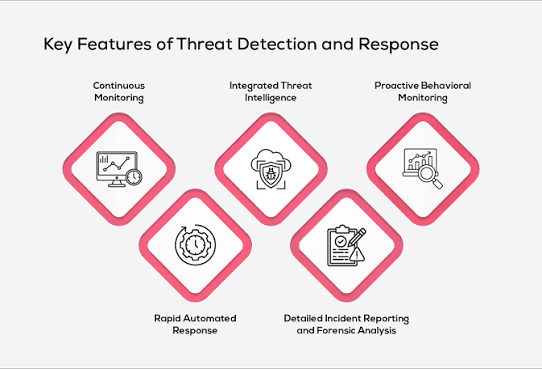
As digital environments become more complex, threat detection will also need to become smarter and faster. Automated analysis, behavioral monitoring, artificial intelligence, and real-time security intelligence are likely to play an increasingly important role.
At the same time, organizations will continue to need skilled cybersecurity professionals. Technology can identify suspicious patterns, but people are still needed to understand context, investigate complicated incidents, and make important security decisions.
The future of cybersecurity will likely depend on a combination of advanced technology, strong security policies, employee awareness, and continuous monitoring.
Frequently Asked Questions
1. What is threat detection in cybersecurity?
Threat detection is the process of identifying suspicious activities, vulnerabilities, and potential cyberattacks within a digital environment. It can involve monitoring networks, devices, applications, user behavior, and cloud systems to find signs of malicious activity.
2. Why is threat detection important?
Threat detection is important because it can help organizations discover cyberattacks early. Early identification gives security teams more time to investigate, contain the threat, protect sensitive information, and reduce potential damage.
3. What are common examples of threats detected by security systems?
Common examples include malware, ransomware, phishing attacks, unauthorized account access, suspicious network activity, data theft, and insider threats. Different detection systems may specialize in different types of security events.
4. How does AI help with threat detection?
AI can analyze large volumes of security data and identify unusual patterns. It can help security teams find suspicious behavior more quickly, prioritize alerts, and recognize relationships between different security events. Human investigation is still important when making final security decisions.
5. What is the difference between threat detection and threat prevention?
Threat prevention focuses on stopping threats before they can successfully enter or damage a system. Threat detection focuses on identifying suspicious activity that may indicate an existing or developing threat. Both are important components of a strong cybersecurity strategy.
6. Can threat detection protect cloud environments?
Yes. Cloud threat detection can monitor user activity, account access, configurations, applications, and data transfers for unusual behavior. It can help organizations identify potential attacks or unauthorized activity within cloud environments.
7. What challenges do organizations face with threat detection?
Common challenges include large numbers of security alerts, false positives, constantly changing attack methods, limited cybersecurity staff, and complex IT environments. Organizations need effective processes and properly configured tools to manage these challenges.
8. How can a business improve its threat detection?
A business can improve threat detection by maintaining reliable security logs, monitoring user and device behavior, updating software, educating employees, prioritizing high-risk alerts, using appropriate security technologies, and regularly testing its incident response procedures.
Conclusion
Threat detection is a fundamental part of modern cybersecurity. It helps organizations identify suspicious behavior and potential attacks before they develop into major security incidents.
From malware and ransomware to unauthorized access and insider threats, modern organizations face a wide range of risks. Effective detection requires more than a basic antivirus program. It involves monitoring systems, analyzing behavior, collecting security information, using appropriate technologies, and maintaining well-trained security teams.
As cyber threats continue to evolve, organizations must remain proactive. Regular monitoring, employee education, updated security systems, and effective incident response procedures can all contribute to stronger protection.
Ultimately, the goal of threat detection is simple: identify potential threats as early as possible and give security teams the information they need to respond effectively.